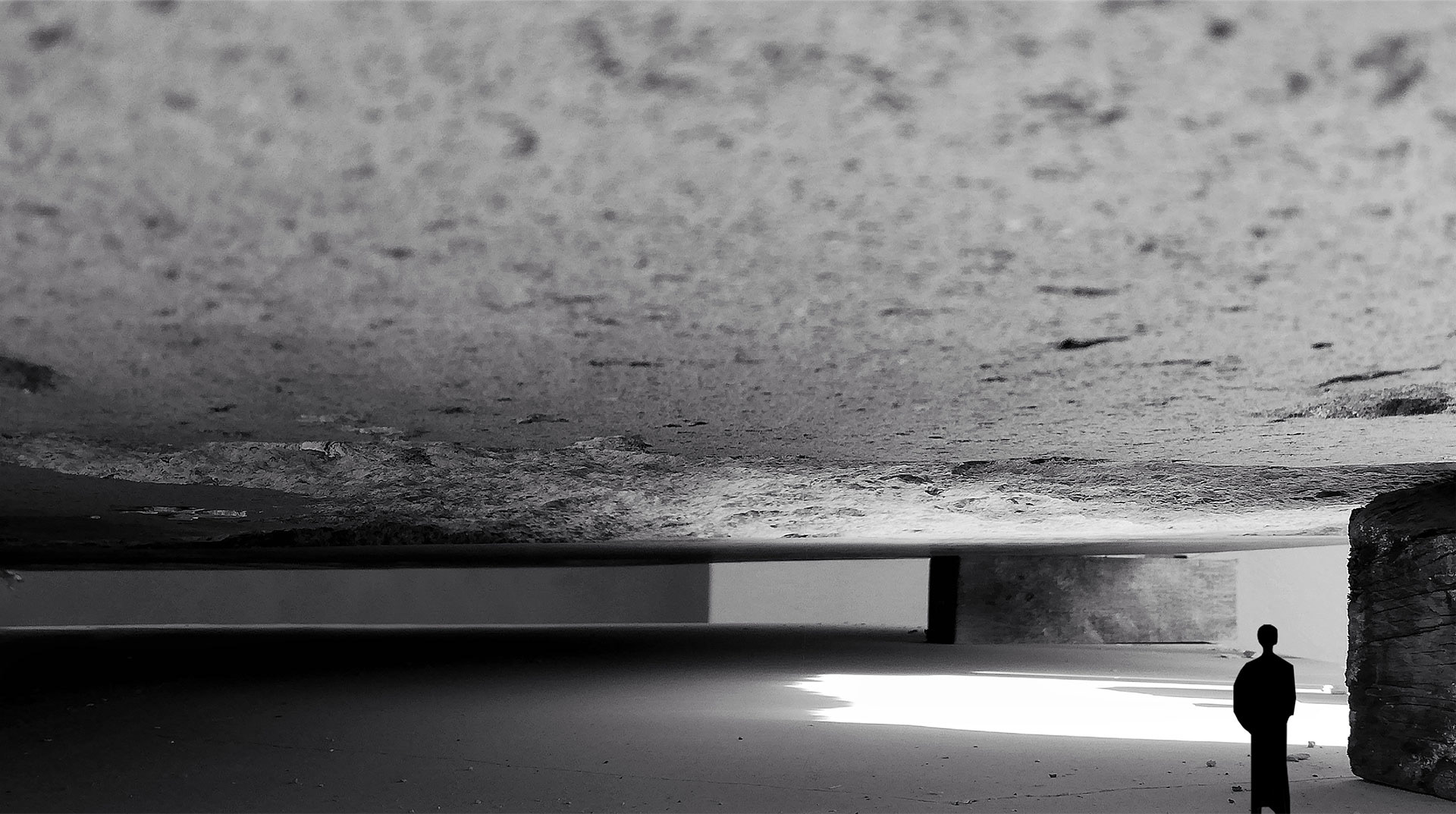
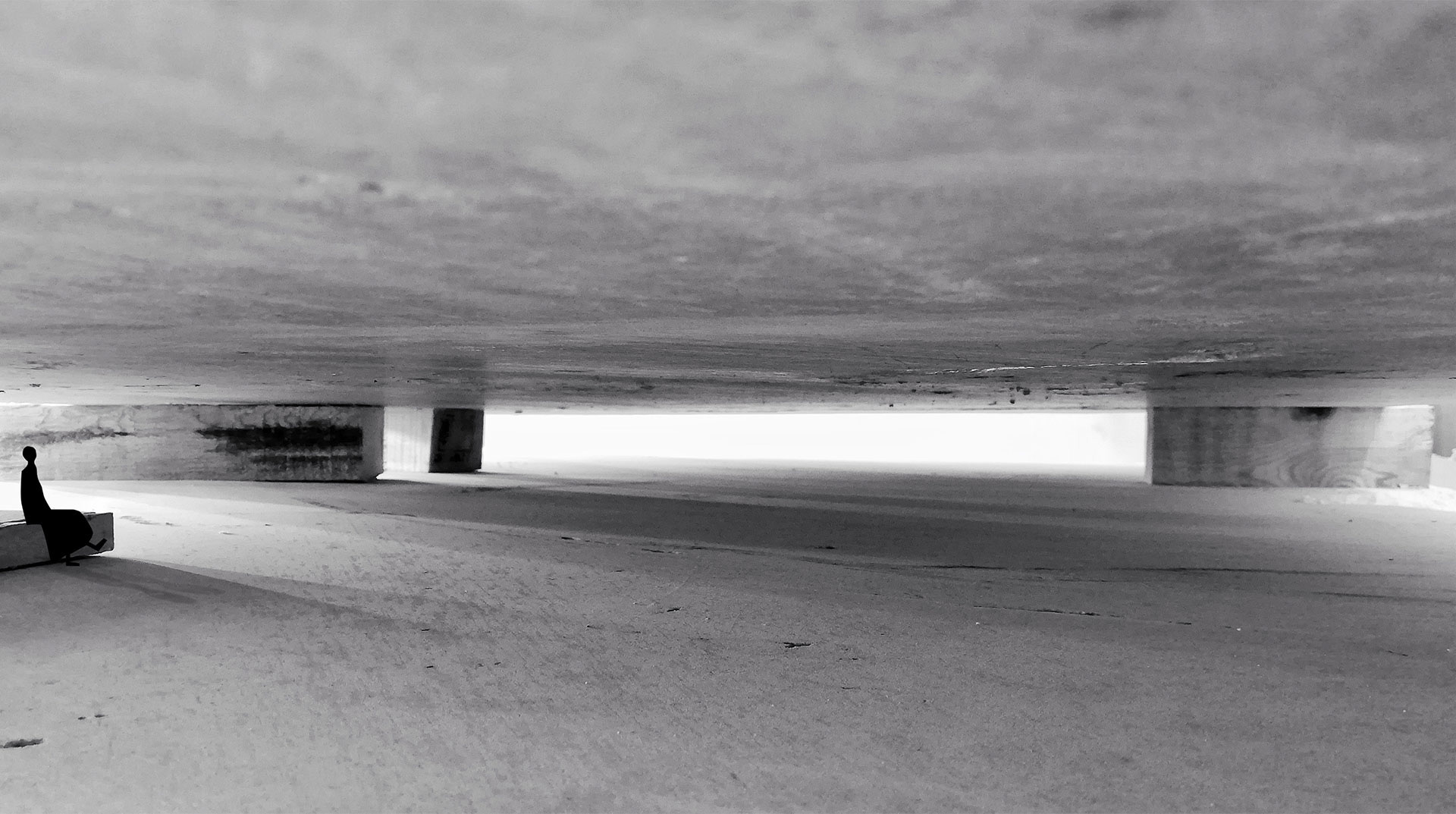
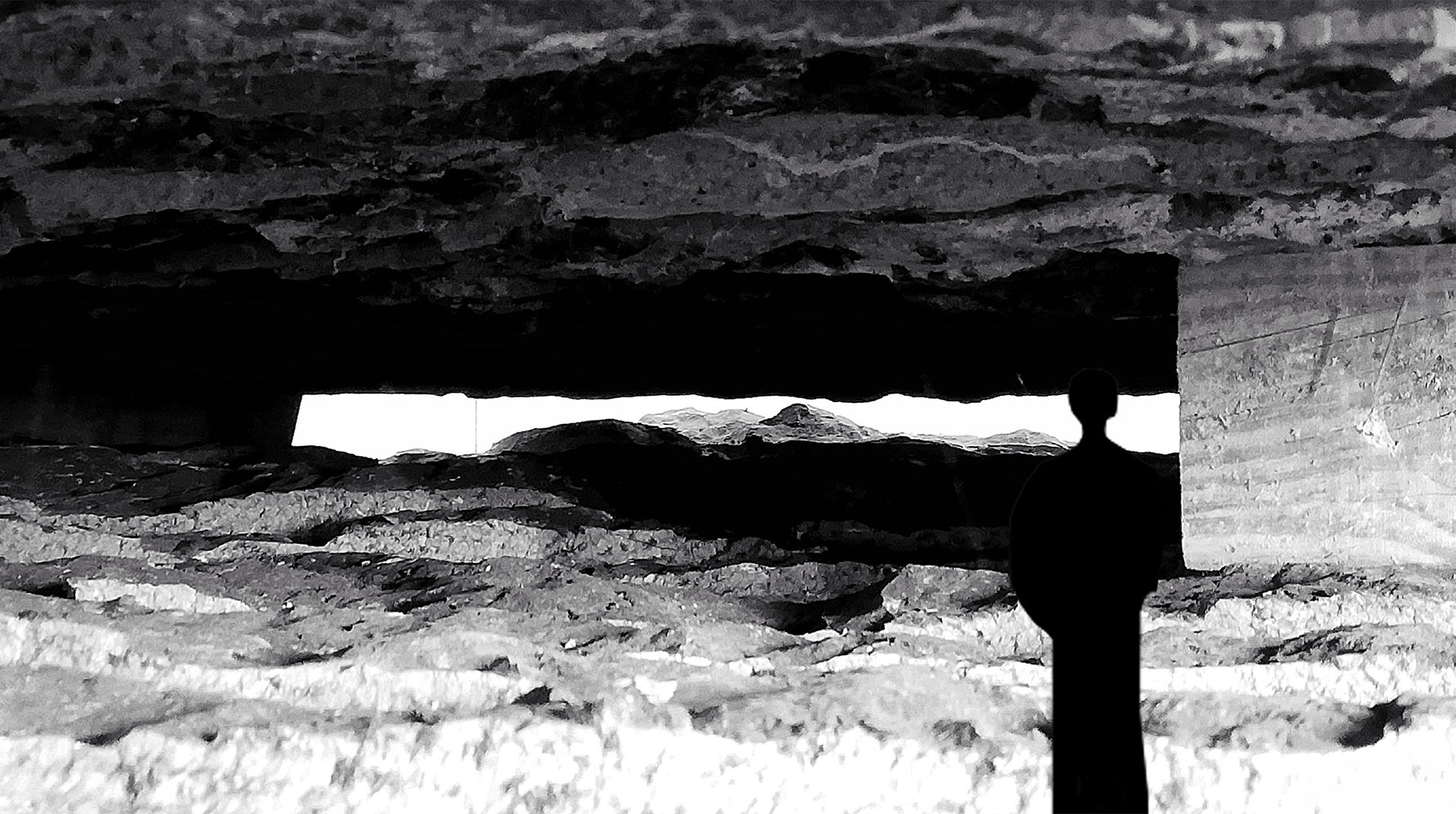
Il progetto "I luoghi del pensiero" nasce dalla volontà di trasformare lo spazio architettonico in un'esperienza fisica e mentale. Un’architettura essenziale in cui la riduzione degli elementi costruiti lascia emergere la relazione tra luce, materia e paesaggio.
Il limite non è inteso come una chiusura, ma come uno strumento per orientare lo sguardo e amplificare la percezione dello spazio. Le superfici materiche, le masse pesanti e le aperture profonde costruiscono una dimensione sospesa, quasi primordiale. La presenza dell’uomo, ridotta a una scala minima, rende leggibile la proporzione tra il corpo e la materia e introduce una dimensione contemplativa:
Il limite non è inteso come una chiusura, ma come uno strumento per orientare lo sguardo e amplificare la percezione dello spazio. Le superfici materiche, le masse pesanti e le aperture profonde costruiscono una dimensione sospesa, quasi primordiale. La presenza dell’uomo, ridotta a una scala minima, rende leggibile la proporzione tra il corpo e la materia e introduce una dimensione contemplativa:
- la gravità come esperienza della materia e del peso;
- l’infinito come percezione di una profondità che oltrepassa il limite costruito;
- l’orizzonte come relazione tra interno ed esterno, tra finito e indefinito.
- l’infinito come percezione di una profondità che oltrepassa il limite costruito;
- l’orizzonte come relazione tra interno ed esterno, tra finito e indefinito.
L’architettura non cerca quindi di rappresentare un luogo, ma di costruire le condizioni per percepirlo.
The "Places of Thought" project stems from the desire to transform architectural space into a physical and mental experience. A minimalist architecture in which the reduction of built elements allows the relationship between light, matter, and landscape to emerge. The boundary is not intended as a closure, but as a tool to direct the gaze and amplify the perception of space. The material surfaces, heavy masses, and deep openings create a suspended, almost primordial dimension. The human presence, reduced to a minimum, makes the relationship between body and matter legible and introduces a contemplative dimension:
- gravity as an experience of matter and weight;
- infinity as the perception of a depth that transcends the constructed boundary;
- the horizon as the relationship between interior and exterior, between finite and indefinite.
Architecture, therefore, does not seek to represent a place, but to create the conditions for perceiving it.
- gravity as an experience of matter and weight;
- infinity as the perception of a depth that transcends the constructed boundary;
- the horizon as the relationship between interior and exterior, between finite and indefinite.
Architecture, therefore, does not seek to represent a place, but to create the conditions for perceiving it.